
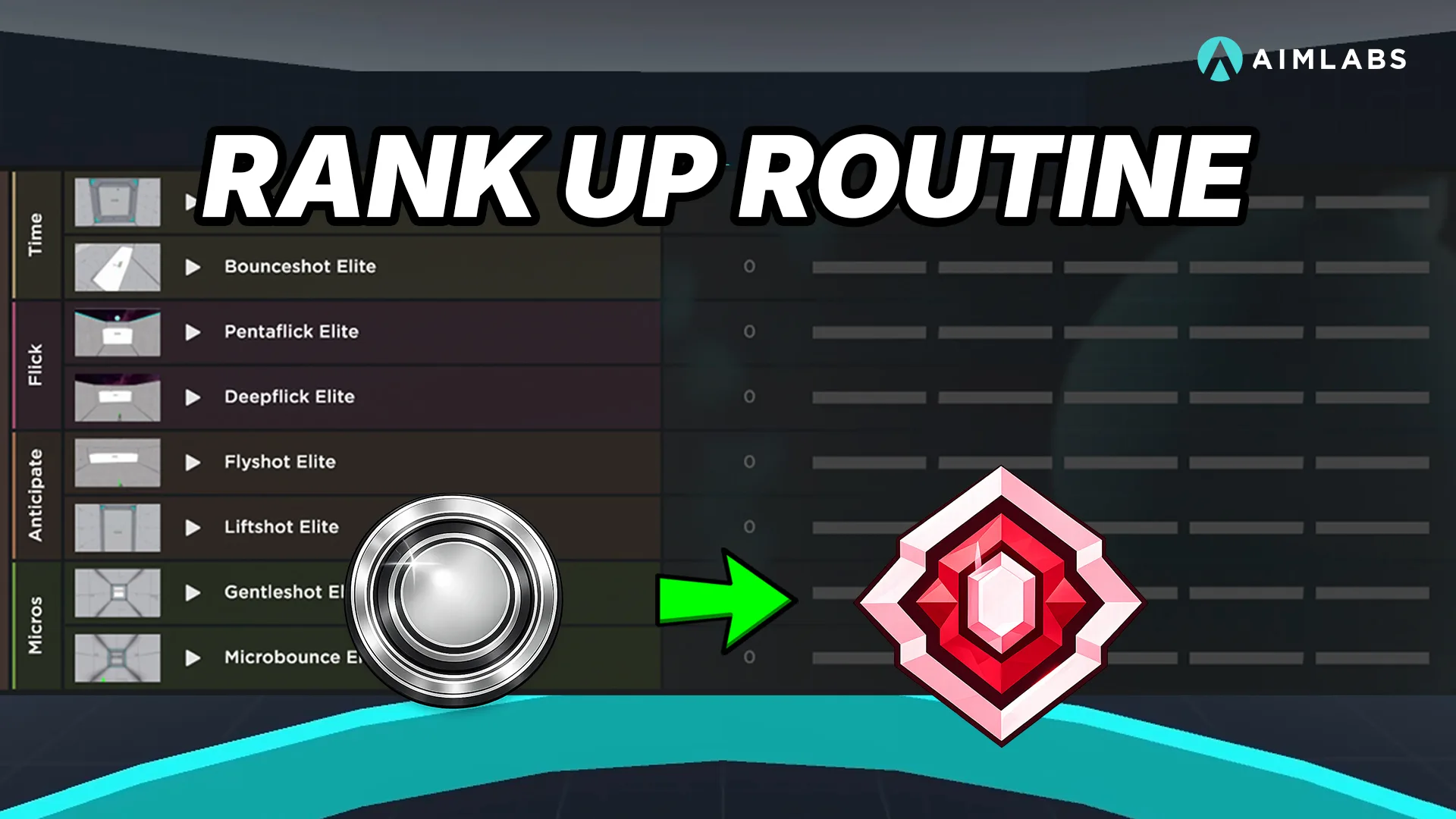
How to Build an Aim Training Routine from Your Aimlabs Benchmarks

Two weeks ago, we posted a new video to the Aimlabs YouTube channel about using the Aimlabs Official Benchmarks to diagnose your aim. Not just “am I good or bad?” but why you’re missing shots. Are you slow on acquisition? Shaky on micros? Struggling to stay stable when targets strafe? The video was a deep dive into the Benchmarks system and how it applies to your aim, while breaking aim down into Tap, Track, and Switch, then digging into the subskills underneath.
This new video is the next step: what to actually do with those results.
If Benchmarks are the test, they’re not the training plan. Just like you wouldn’t walk into a gym, max out every lift, and call it a workout, you shouldn’t just spam Benchmarks and hope your scores magically rise. The video breaks down three key training principles: isolation, specificity, and progressive overload, and shows how they apply directly to aim training. Instead of grinding everything equally, you’ll learn how to identify your weakest subskill and build your sessions around fixing that exact problem.
From there, it gets practical. Each section of the Benchmarks: Tap, Track, and Switch, is broken down with a clear explanation of what it’s actually testing. Low score in Tap Time? You’re probably mistiming shots on strafing targets. Weak in Track Reactive? Direction changes are throwing you off. Struggling with Switch Acquisition? You’re hesitating before your mouse even moves. The video pairs each weakness with specific task suggestions, so you’re not guessing what to queue up next.
It also tackles something a lot of players overlook: structure. How long should you train? How often? Should you do everything in one day or split it up? The recommended approach, a simple rotating Tap/Track/Switch split with focused 15-minute sessions, keeps things consistent without burning you out. It’s not about marathon grind sessions. It’s about deliberate reps, spaced over time, with difficulty adjusted just enough to force improvement.
If you’ve already run Benchmarks and have your results sitting there, this is the piece that turns numbers into action. Instead of random grinding, you’ll walk away with a clear, repeatable routine built around your weaknesses. Give the video a watch, then take another look at your scores… you’ll probably see your training a little differently.