
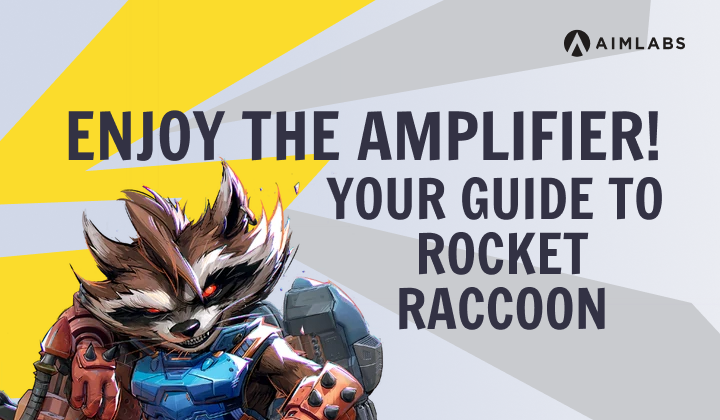
How to Play Rocket Raccoon in Marvel Rivals in 2026

Rocket Raccoon has one of the most interesting… and tumultuous… origin stories in the Marvel Rivals support pool. In the game’s early seasons, a narrative took over, insisting that Rocket was a throw pick, as a support hero with an ultimate that offered a damage boost in a meta that was being decided by support ults that would make their teams borderline unkillable for their duration. Infamously, players would crash out upon hearing “Hey team, enjoy the amplifier” as the enemy team dropped a moon on their heads.
What that narrative missed was that Rocket was doing something different, providing his team with consistent, sustainable healing that was ultimately found to be quite overtuned. His bouncing healing orbs could reach teammates through walls and around corners, his mobility made him dramatically harder to kill than most supports, and his revival beacon was generating value on a cooldown that most players weren’t fully accounting for. Players who understood those tools consistently won games with him. Some Rocket mains would even do so while boasting that they were doing zero damage.
Since those early seasons, the kit has evolved through a series of adjustments, most notably the addition of a healing component to C.Y.A. in Season 2, and subsequent tweaks, both in the form of buffs and nerfs. He now sits in the top 10 in competitive win rates across all heroes on both PC and console, with a win rate locked between 52 and 53 percent firmly across virtually every rank bracket. He doesn’t dominate pick rate conversations the way Invisible Woman does, but the players who know him are getting results. This guide is all about helping you become one of those Rockets.
Repair Mode
Rocket’s healing comes from his alternate fire, Repair Mode, which launches bouncing orbs that travel through allies and heal anyone in their proximity. Each orb heals for 50 HP per second as it passes near teammates, and a direct hit on an ally triggers an additional 50 HP burst on top of that. You’ve got 10 orbs per magazine and a quick reload, so there’s no real reason to be conservative with them. Fire constantly, and build up the rhythm of firing and reloading.
The burst heal is where you’re able to really sustain your teammates even after the amounts were gradually nerfed. It resets on each bounce, so a shot that clips the ground just before reaching a teammate triggers that burst twice instead of once. Aim at your teammate’s feet rather than their center of mass, and you’ll reliably get that double proc on most shots. If they’re standing near a wall, the geometry can push it to three. Rocket sits low to the ground, so jumping while you heal can give you a better downward angle to hit feet consistently. It’s a habit that takes a few games to lock down, but it changes your healing output noticeably once it clicks.
One thing that doesn’t get explained clearly anywhere: only one orb can heal a single target at a time, though it moves between multiple injured allies as it travels. What that means practically is that spamming orbs into a grouped team fight is correct, but precisely targeting one specific person while others need healing isn’t. When your team is above 75 percent health and nobody’s in immediate trouble, that’s your window to dish out some damage. The orbs will slow down near injured allies, helping them linger instead of just bouncing away at top speed.
The corner and wall healing is one of Rocket’s most underrated advantages and something worth spending time learning on each map. A shot bounced off a wall or the floor can reach teammates around corners, through doorways, or in adjacent rooms, entirely out of your line of sight. This considerably changes which positions are viable for Rocket, and it gives you the opportunity to heal divers or flankers who aren’t in your immediate line of sight.
One setting worth turning on in Rocket’s hero specific options is reticle healing feedback. It puts a green glow around your reticle when orbs are actively healing someone, including teammates you can’t see, so when you’re banking shots around cover or trying to heal into an Invisible Woman ultimate where your team’s invisible, it tells you whether you’re actually connecting or just wasting shots into a wall.
Bombard Mode
At close range, Rocket’s primary fire puts out over 200 DPS before headshots. The falloff is steep, though, starting at 10 meters and capping out at 20 with a 40 percent damage reduction. You’re not a sniper, but you can actually turn a fight on a diver if your aim is dialed in.
What it’s actually for is everything close and everything destructible. Moon Knight ankhs, Peni nests, Loki clones or healing gems, Groot walls, enemy deployables in general go down fast under Rocket’s sustained fire, and clearing them is a form of support that never shows up in the healing stats but absolutely changes how fights play out. As a Rocket player, considering those deployables as your responsibility to burn down is going to offer intangible support that players won’t always notice, but they’ll feel it in the long run.
Doctor Strange and Magneto shields are worth burning through when your team needs a lane opened. Against tanks pushing into your team at close range, Bombard Mode outputs more than most enemies expect from a support. The damage they don’t see coming is often the damage that matters.
A clean technique for balancing the two modes: hold Bombard Mode, then tap Repair Mode while keeping the primary fire input held down. It fires an orb with minimal downtime and automatically returns to damage output. Keep in mind, your reload will reload both Bombard Mode and Repair Mode, so you might as well use both together.
B.R.B.
The Battle Rebirth Beacon is a major difference maker between good and great Rockets. The revival function is the obvious component, resurrecting the next teammate to die within a 50-meter radius of the beacon at full health, but it does have to be placed before that teammate dies; you can’t cheat the timing. That timing and location are going to be big factors.
If you really want to show off as a mindful Rocket, before the round starts, drop the beacon in spawn. Your whole team gets access to armor packs and jump packs before first contact, and recalling it just as the doors open resets the cooldown to 5 seconds instead of the full 45. You’re heading into the first fight with your revival ready and your team slightly better resourced than the enemy’s. It’s a free advantage that takes about 3 seconds to set up, and maybe a quick shoutout on VOIP.
It’s extremely important that you’re on top of your cooldown control with the beacon. Recalling it yourself before it takes damage costs 5 seconds, and if it takes damage first, the cooldown scales with how much it absorbed. A destroyed beacon or a successful revival both trigger the full 45-second cooldown, but if you know a diver or flanker is lurking nearby, recalling it and replacing it is the play. Do not let someone break that beacon for free.
The placement is also critical… it has to be close enough to be within revival range, but hidden or positioned so it won’t get spotted or picked off from afar. Tucking it near health packs, behind cover on flank routes, or in spots where the ceiling catches the armor pack spawns so they don’t give away the position are all important considerations. On convoy maps, move it forward as your team advances. A beacon that’s outside revival range because the fight moved isn’t doing anything. If someone is going to commit to trying to break it, make sure they have to trade their life for the beacon.
Worst case scenario, though, pay attention… if some unseen flanker took out your beacon, that’s just information you need to pass on to your team immediately so they can punish them.
Jetpack Dash and Movement
As a Rocket, you’re going to find yourself leaning on your dash ability often. You get two charges, each with a 10-second cooldown. Spend both of those charges early, and you’re exposed for the next 10 to 20 seconds, then you’re pretty much toast, even with Rocket’s ability to scurry up walls.
Against long-range hitscans, dashing around cover can help break up their line of sight. With divers closing the gap, you can dash toward your team rather than away, baiting them into your frontline where they become someone else’s problem instead of drawing the fight further from help. If brawling tanks are chasing you, dash away and make them work for it, leaving them open to punishment for overextending and taking them away from more important or effective work.
Rocket’s wall climb runs at 10 meters per second, which is faster than standard movement, and combining it with an immediate dash can unpredictably amplify distance and direction. Most players tracking you on foot aren’t calibrated for that speed change, and those directional jukes on a wall can be harder to read than movement on the ground, but those diving characters who can stick to you with attacks, like Iron Fist, will be difficult to shake.
Dashing or wall climbing up to higher positions gives you the ability to rain orbs down at your team’s feet, and it can give you a better viewpoint of the overall battle taking place. The glide passive, where you hold jump to slow fall, extends your time in the air and keeps options open longer. It’s simple, and there isn’t much technique to it beyond using it.
A quick hitbox note to consider… Rocket’s tail counts toward his hitbox and shifts left when he moves or fires. Rotating clockwise around whoever is engaging you means shots that trail slightly behind your body hit empty space rather than your tail. Against Hawkeye and Hela specifically, that difference matters.
C.Y.A.
Rocket’s ultimate, C.Y.A., gives a 40 percent damage boost, along with that additional 100 bonus health per second (which is capped at 150) for every teammate in a 20-meter radius for 12 seconds. The amplifier itself has 800 HP, which means enemies will absolutely try to destroy it if you give them a clean look at it. Placement and timing are what separate a C.Y.A. that swings a fight from one that gets shredded immediately and wastes your ultimate charge.
The amplifier’s range is a sphere, not a flat circle, so height affects coverage. An elevated placement could keep it out of reach of some heroes, but that shrinks how many ground-level teammates it reaches. Placing it at ground level maximizes coverage, but that makes it an easier target. Placing it behind cover that forces enemies to expose themselves to destroy it is the ideal option when possible, because enemies trading their positioning to break your amplifier while your boosted team runs through can be a worthwhile trade.
While there’s still pressure to use support ults defensively, timing it to use it for pushing or taking critical space can be a game-changer. When the enemy is already committed, and your team is pushing in, the damage boost can shift a toss up fight into a secured win. They can focus the amplifier, or they can take cover from your team’s boosted damage, and forcing that choice is the point. When a Groot is on the enemy team, think about placing it on an elevated surface rather than the ground so his walls can’t simply block it off. Phoenix, Punisher, Hela, and Scarlet Witch can all shred it quickly if it’s exposed, so placement discipline matters more than usual against heroes like that.
If an enemy Rocket ults at the same time as yours, just focus theirs down as quickly as possible. Try to secure that return on ult economy investment before they negate it.
Rocket Raccoon’s Team-Ups
Season 9 has changed the way we look at Team-Ups, and Rocket received some interesting team-ups of his own, while Punisher and Peni Parker both regained their old Rocket team-ups, Ammo Overload, and Rocket Network, respectively. While each provides more benefits when Rocket is actively on their team, for the most part, each hero handles those team-ups on their own end.
On Rocket’s side, Rocket and Squirrel Girl now team up for the Mammalian Bond, which adds the ability for Rocket to throw down a scattered batch of acorns, which provides a burst of healing and cooldown reduction. Rocket starts with two charges of the acorns, with each charge taking 20 seconds to recharge. Acorns can be collected or thrown directly into teammates for 20 health per acorn, as well as a 0.5s cooldown reduction. When Squirrel Girl is actively on the team, Rocket gains an additional charge.
The Planet X Pals team-up with Groot is likely very familiar, as Rocket can still ride on Groot’s shoulder, but there is the addition of Thorny Spores replacing the Bombard Mode when the team-up is active. On impact, these will deal continuous damage to enemies within the radius, while healing and adding bonus health to friendly players. The ability to ride Groot requires the tree on the team, of course, but it also extends the duration of the ability by 4 more seconds, moving from 8 to 12 seconds. Each Thorny Spore does 18 damage per hit, with 5 additional damage over time, while also healing teammates. It’s worth noting that with Groot on the team, the ability’s duration lasts about the same amount of time as the ability itself, which means you can run this constantly.
How to Think About Playing Rocket
The argument for Rocket isn’t that he out-heals anyone or wins fights in a single moment, it’s that he’s still alive and still healing when a less mobile support would be dead… that his revival beacon flipped a fight that looked lost… or even that his amplifier was up for the third consecutive engage because he cycled it faster than anyone expected. The win rate numbers across every rank sort of tell the story for him.
Cycling that ult is more of a difference maker than other players realize. Every decision about positioning, mode switching, and beacon management feeds into getting C.Y.A. active in as many significant fights as possible. Healing through grouped targets, weaving in Bombard Mode during low-pressure windows or bursting down a diver terrorizing your backline before their supports can heal them, bouncing orbs through both teams in close fights… all of it accelerates the cycle, and while that might not be Luna Snow or Invisible Woman’s ult, it’s making a difference.
Complementing the other support on your team can also play a big part of your lineup’s composition. Running alongside Invisible Woman or Cloak and Dagger, you can lean into damage, deployable clearing, and positioning more aggressively without the healing falling apart behind you. With lower output support in the other slot, you’ll need to focus more on keeping your teammates in action.
For aim training, the Marvel Rivals Aim Basics Routine can help with a lot of Rocket’s aiming needs, such as getting your orbs in the direction of your teammates or having the ability to burst down divers who think they have a support kill in the bag. Believe it or not, Rocket benefits from having strong aim too.