
The Smoothness Skill that Counter-Strike Players Don’t Know They’re Missing

Most players think of smoothness as a tracking skill… something you need for Apex Legends or Overwatch, for chasing down evasive targets across open ground. That’s true, but it’s only half the picture. Smoothness is just as relevant in Counter-Strike and VALORANT, it just shows up in a different context that most players don’t immediately recognise as a smoothness problem.
Consider what’s actually happening when you slice the pie around a corner. Your character is moving laterally, revealing more of the angle with each step, and your crosshair needs to stay locked on the position where an enemy head would appear. The environment is moving across your screen while your aim holds still. Your mouse hand is making a controlled compensatory movement the entire time, smoothing out any drift or jitter that would pull the crosshair away from that position. The motor demand is the same as tracking a moving target, you’re just the one doing the moving.
When that movement is shaky, your crosshair skips across the position rather than landing cleanly on it, and you arrive at the angle a fraction out of position. In a game where the window to land a first shot headshot is measured in milliseconds, that fraction matters. Smooth mouse control during lateral movement is what keeps your crosshair where your crosshair needs to be.
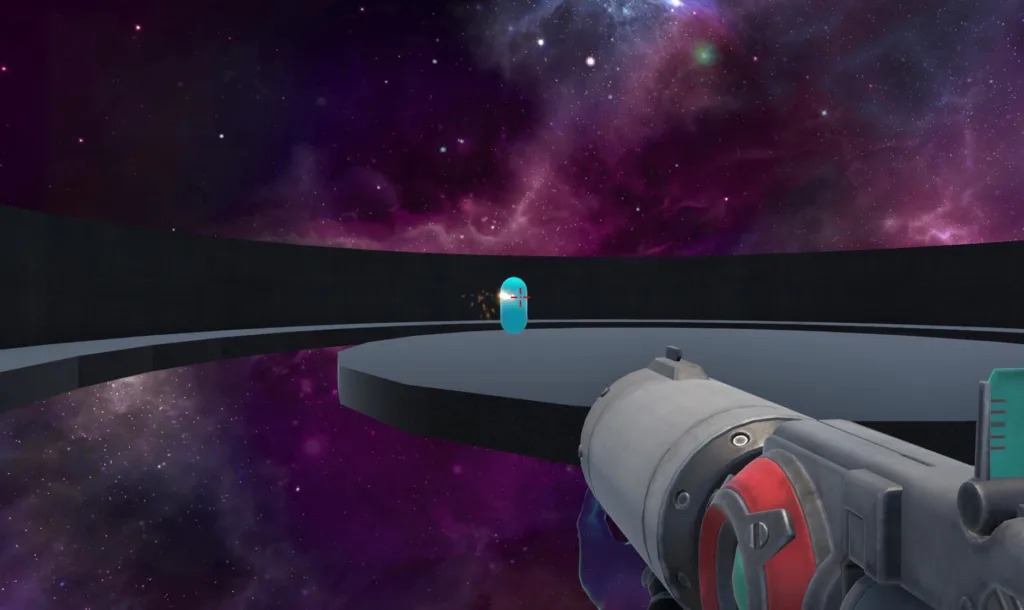
Dueltrack Entry trains exactly this. The task moves you automatically along a rail while a pill shaped target strafes independently in front of you. Your job is to keep your crosshair on the target despite two simultaneous sources of displacement, your own movement and the target’s. The compensatory mouse control that keeps you on target here is the same discipline that keeps your crosshair stable as you work around a corner in a real match. Give it a run and pay close attention to what your mouse hand is actually doing when the task moves you. That awareness translates directly.