
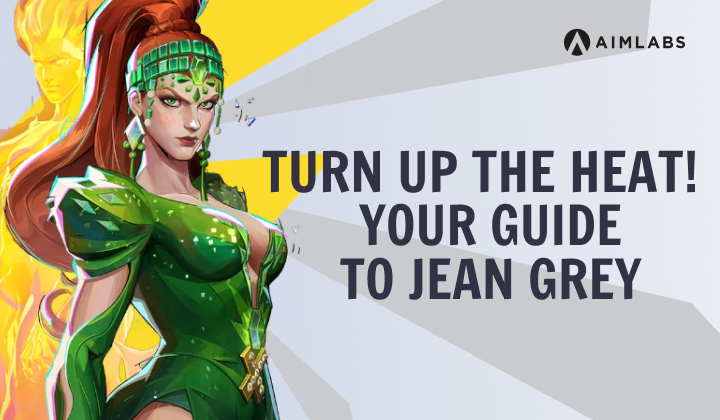
How to Play Phoenix in Marvel Rivals in 2026

Jean Grey sits in an interesting spot in the current Marvel Rivals meta, with a respectable pick rate, landing 7th among duelists in competitive PC lobbies across all ranks, but her win rate tells a different story, hovering near the bottom of the role on both platforms. On console especially, girl is struggling. With Phoenix, the misread seems to be that players treat her like Hela, park her at range, and wonder why the damage feels inconsistent, and the kills don’t stack up.
Players who have a good grasp on Phoenix are showing something else… At Celestial rank on PC, her pick rate jumps to over 8 percent, second only to Winter Soldier among duelists, and her win rate climbs closer to 50 percent. Higher level players on mouse and keyboard are clearly finding something in her kit that the general population just isn’t. Her hitscan primary fire and crit-dependent Spark stacking both seem to translate better to mouse and keyboard than to controller, which explains the console numbers. That said, controller players with strong aim have a genuinely dangerous tool here if they put in the work.
Jean has experienced some fairly major changes across the various balance patches, so this guide is about understanding who she is now and how to make the most of her current kit.
Cosmic Flames
Jean Grey’s primary fire is hitscan, firing just over two shots per second that deal 55 to the body and 110 on a headshot. Every body shot applies one Spark to the target. Every headshot, or crit, applies two. Three Sparks triggers an explosion, meaning accuracy is going to make you that much more lethal. In close-range engagements against squishies, two headshots are all it takes.
Damage falloff is what sets Phoenix players apart, with some players failing to fully comprehend its impact. Her optimal range is within 10 meters, then falloff begins there, and caps out at 60 percent of full damage beyond 30 meters. At max falloff, a body shot is doing 33 damage and a headshot 66. Even with Sparks and explosions, those numbers aren’t likely to be fast enough to out-DPS any half-decent supports.
A useful self-check during matches is to pull up the scoreboard to check your accuracy. If you’re seeing 40-45%, you’ve got a decent baseline, and consistently hitting above that is where you’ll start to feel the difference in her output. The self-healing from Spark explosions means that hitting shots isn’t just about damage… It’s about sustainability. A Phoenix that’s landing consistent headshots is effectively playing with more than her 250 HP would make it seem.
Sparks
Every ability in Jean Grey’s kit feeds into the same engine, as sparks are applied to enemies by her primary fire, her abilities, and her ultimate, and once a target accumulates three, they trigger a fiery explosion dealing 35 damage to that target and 35 damage in a 4-meter radius around them. Any enemy caught in that radius also receives a Spark, which is where chain reactions come from. Hit a target near two others, the explosion marks all three, which can lead to some big damage against clusters of enemies.
Each time three Sparks trigger an explosion, Jean Grey heals herself for 10 HP per second over 4 seconds, resetting the timer rather than stacking the rate. If you’re able to keep popping Sparks, that rolling heal will keep you functional at ranges where a duelist with less mobility would be running to safety, or a heal.
The chain-reaction setup is going to require some deliberate thinking early on. You can body shot a target once, headshot them to get to three Sparks and trigger the explosion, which marks nearby enemies, before you redirect to those enemies while the fresh Spark is active. Sparks fade after roughly 6 seconds without follow-up, so the chain only works if you stay on target and keep the pressure coming. Trying to set up chains from outside the effective range produces smaller explosions on fewer Sparks and breaks the whole loop, which is why we stress that Jean isn’t just another Hela.
Telekinesis Burst
Jean’s Telekinesis Burst fires a series of three fiery explosions in a straight line on a 10-second cooldown. The first explosion stuns for just about 0.3 seconds, and the second and third explosions slow enemies by 30 percent for 2 seconds, applying a Spark to each enemy it hits. Keeping in mind that the stun is only proc’d by the first explosion, with the next two only applying a slow, is critical for understanding what’s happening when you throw this into a crowd.
If you’re dealing with divers, place it at your feet as someone is closing the gap. This is one of the most reliable uses in Phoenix’s kit. A Black Panther or Spider-Man dashing into you just eats the stun, and the slow from the subsequent explosions buys time for a follow-up combo, or a Telepathic Illusion escape. If you can combo the two back to back, opening with Telekinesis Burst into the dash, before Telepathic Illusioning away, you can combo that with shots to set off the Spark and really punish that diver for thinking you were up for grabs. Unless they’re a tank or they have a very special pocket healer, they’re probably getting an express ticket to the spawn room.
When it comes to team fights, using it from slightly elevated angles into grouped up enemies amplifies the chain reaction potential big time. All three explosions applying Sparks to a clustered group creates a cascade that builds fast, especially if you can follow up with some accurate shots. On top of that, it can also cancel specific ultimates. Doctor Strange’s Eye of Agamotto and Scarlet Witch’s Chaos Magic are both interruptible with the stun, but the timing can be tricky.
Telepathic Illusion
With Telepathic Illusion, Jean dashes 8 meters in any direction on a 12-second cooldown, leaving behind a decoy that detonates after a brief delay, which deals 50 damage and applies one Spark to enemies within 3 meters. The dash has iframes, meaning if you time it right, you can dodge through just about anything in the game. That includes Iron Man’s Invincible Pulse Cannon, Jeff’s It’s Jeff, and Venom’s Feast of the Symbiote. The window is tight, and if you’re too early or too late, you’re still eating the ult. This one will require some practice for sure.
The decoy can do some heavy lifting in its own right, with the 50 damage detonation on top of a Spark stack, it can finish an enemy with low HP who was gambling on finishing the kill.
One thing we want to note, cooldown discipline is huge for Phoenix, especially with Telepathic Illusion. If you’re just burning it to reposition, it’s unavailable when a Psylocke or a Black Panther is lurking and hunting you. Save the dash for when it’s a life or death situation for you or your opponent.
Dark Ascent
Dark Ascent gives Jean Grey free flight, which is powered by an energy bar with a maximum of 1200 energy, depleting at 400 per second and recovering at 120 per second once flight ends. That calculates to roughly 3 seconds of flight before the bar empties, with a full 10-second recharge from empty before it’s available again. There’s a 1-second delay before recovery begins after exiting flight, but if you exit early, you can still reuse it, or recharge it faster than if you burn through the entire energy bar. It’s worth enabling the hold-to-activate setting rather than toggle, as it gives you more precise control over when you enter and exit the flight window.
Before Season 4.5, Dark Ascent replenished ammo while active, but that’s gone now. What remains is a repositioning tool, which is still good, but it needs to be used with the recharge window in mind. Getting into a quick off-angle in the middle of a fight, firing off a few shots from an unexpected position, and landing back with your team before the bar empties is a solid pattern to use. Alternatively, it’s a great escape tool when things go sideways. It’s not a tool for hovering in the air and firing at the enemy team from up high, as primary fire will cancel it.
As a quick word of warning… Dark Ascent makes a loud, distinctive sound that the entire enemy team can hear. Savvy divers will hear that like it’s a dinner bell, so don’t fly to an isolated position and expect it to go unnoticed by higher-level players.
One last thing, the ability can also cleanly counter ground-based ults. If you hear the opposing Phoenix pop her ultimate, or if Jeff is looking to snatch you up, or if you know Venom is about to pop up with his ult, you can fly to safety as long as you haven’t burned the energy bar, so keep that context in mind, too.
Endsong Inferno
Jean’s ultimate, Endsong Inferno, sends her into the air as the Phoenix and crashes her down onto a targeted area, dealing 140 damage on impact and applying one Spark to each enemy you hit. The following shockwave deals 50 damage, applying an additional Spark to all enemies in range, while also destroying enemy summons, shields, and all bonus health in the area. The shockwave can travel through walls, which is worth considering as you’re setting up your ult. Strange and Magneto shields, Rocket’s amplifier, Venom’s overhealth, Loki clones, Peni’s nest, Rocket’s B.R.B., are all on the table to get destroyed.
Now, you’re not invincible while you’re ulting. The ult Phoenix form has 400 HP, and can potentially be shot down out of the air. If you’re ulting out in the open, with a long flight path, you’re leaving yourself open to getting focused by enemies before impact. Popping it close to the enemy team, ideally while they’re already engaged in combat, will significantly reduce the margin for error here. If players are trying to dodge the ult, you can steer it slightly to account, but it’s not mobile enough to dodge as you’re mid-air against a team focusing you.
The map geometry can also compromise Jean’s ult, as low ceilings, bridges, and arches interfere with the flight arc, limiting how high she can rise, and in some situations, it can actually obscure your view. So if you’re trying to shotgun the ult in a tight space, you can potentially end up wasting it, so be aware of your surroundings as you’re setting the ult up.
It’s also worth pre-loading Sparks on the enemy team before you ult. The impact applies one Spark, the shockwave applies another… so think about how that changes the math of your ult if you have a Spark on a few of your targets. Even one enemy with a single Spark is going to explode after getting hit by the ult and the subsequent shock wave, now imagine if it was two sparks on one player, or a spark on a couple of the enemies you’re about to hit with the ult… The math starts to add up, doesn’t it?
On the counterplay side, Endsong Inferno is one of the better tools in the game for removing support ultimates. For example, Luna Snow’s Fate of Both Worlds and Mantis’ Soul Resergence can both be stripped by the shockwave. The Thing is a notable exception, since his specific kit handles it differently: he can physically intercept the firebird by jumping into its path if timed correctly, thereby negating the ground impact entirely, so factor him into your ult plans if he’s on the other team.
Phoenix’s Team-Ups
With the Team-Up overhaul that was introduced in Season 9, Phoenix’s Primal Flame team-up became one-sided for Black Widow, while Jean instead picked up Circle of Life with Hela and Telekinetic Beatdown with Rogue.
The Circle of Life team-up replaces Pisonic Detonation with Phoenix Netherfire, a 12 second cooldown ability that fires a sequence of three explosions at a targeted area. The initial blast is smaller, but it stuns enemies for 0.3 seconds, before the second and third blasts, which are larger, and apply a 40% healing reduction for 3 seconds to every enemy it hits. Each blast in the sequence applies a spark, but the enhanced version of the team-up, when Hela is actively on your team, will apply 2 sparks instead. This is going to double the rate at which Jean can proc explosions on groups of targets, which is extremely beneficial, and the healing reduction will help prevent any quick escapes or saves.
Telekinetic Beatdown adds an ability that fires a telekinetic shockwave forward. If it hits, the Phoenix Force rushes the enemy, delivering a direct hit for 40 damage, applying a spark, before bouncing to nearby enemies. It can bounce up to three times, each also dealing 40 damage. Each subsequent bounce can add a spark to the impacted player, while also healing Jean for 50 HP. When Rogue is in the lineup, the enhanced version of the ability widens the radius of the shockwave, while also improving the Phoenix’s target detection. The self-sustain from the heals can be extremely helpful, especially when combined with the heals provided from spark explosions.
How to Think About Playing Phoenix
Let’s look at Jean objectively… She’s not a frontline brawler, and she’s not a backline poke character… She’s a pressure duelist who plays off angles, disrupts the enemy team by forcing them to address her. Players who are climbing with her at high level are constantly moving, constantly repositioning, and disengaging just as often as they engage. If you’re dying frequently on Jean Grey, the issue is probably your positioning.
That cooldown discipline we mentioned earlier is also a big factor with her kit. Saving Telekinesis Burst for divers or specific ultimate cancels, holding Telepathic Illusion until you need it or can capitalize on it, and using Dark Ascent responsibly is going to make a big difference.
The Spark mechanic really rewards players who think and plan ahead, so think proactively. Shoot the enemies who are close to teammates or the mosh pit, build Sparks with headshots rather than body shots when possible, and think about spacing in regard to the explosion radius. If enemies are too spaced out, you’re missing out on chaining Sparks, you’re not maximizing that self heal, and you’re not making the most of the core mechanic of Jean’s kit.
The Marvel Rivals Aim Basics Routine is a great place to start your aim training for Jean and most other Rivals heroes. Make use of the flicking tasks to train for the headshot-first Spark stacking that defines her primary fire, and utilize those tracking tasks to help your accuracy up close against obnoxious divers. There’s a few factors that are holding Jean down with the win rate, and part of it is certainly aim based, so make sure you’re training and eliminating that potential shortcoming outright.